Commercial Duct Cleaning
AIRTEK is a state licensed HVAC contractor with over 20 years experience in the industry. We are proud to have more than six technicians on our staff have earned the prestigious ASCS (Air Systems Cleaning Specialist) certification by the National Air Duct Cleaning Association. We also have a NADCA certified ventilation inspector on staff. AIRTEK is also a long standing member of the Better Business Bureau with a perfect track record of customer satisfaction. Recent projects include San Diego Airport, Scripps Research Institute, Los Angeles Housing Authority, US NAVY and US Coast guard Indoor air quality is a major issue for building owners and occupants, and can have a significant effect on productivity and employee morale. Contaminated Air… Its Effects
Allergic reactions are the most common health problems that people experience regarding indoor air pollution. An individual can be affected by inhaling/ingesting particles, or by direct contact with the skin. The effects can be immediate, or not show up for years. Immediate symptoms after a single exposure or repeated exposure include irritation of the eyes, nose and throat, headaches, dizziness and fatigue. These are usually short-term and treatable. Molds can cause continuing health problems for individuals who may not realize they are mold sensitive. Health hazards range from infections to irritant and toxic-type allergic reactions. Reactions to molds include sneezing, itching, coughing, wheezing, and shortness of breath. Indoor Air Quality and Your Health Billions of dollars are spent each year to treat the symptoms of contaminated air. . Today, our work environments are air tight and energy efficient. This means that more pollutants and contaminates are trapped inside, lowering the quality of the air we breathe. Research indicates that people spend approximately 90% of their time indoors; risks to human health may be greater due to exposure to air pollution indoors than outdoors. Furthermore, people who may be the most susceptible to the adverse effects of indoor air pollution are those who tend to spend the greatest amount of time indoors. How to Properly Clean Your Air System Determining the Problem
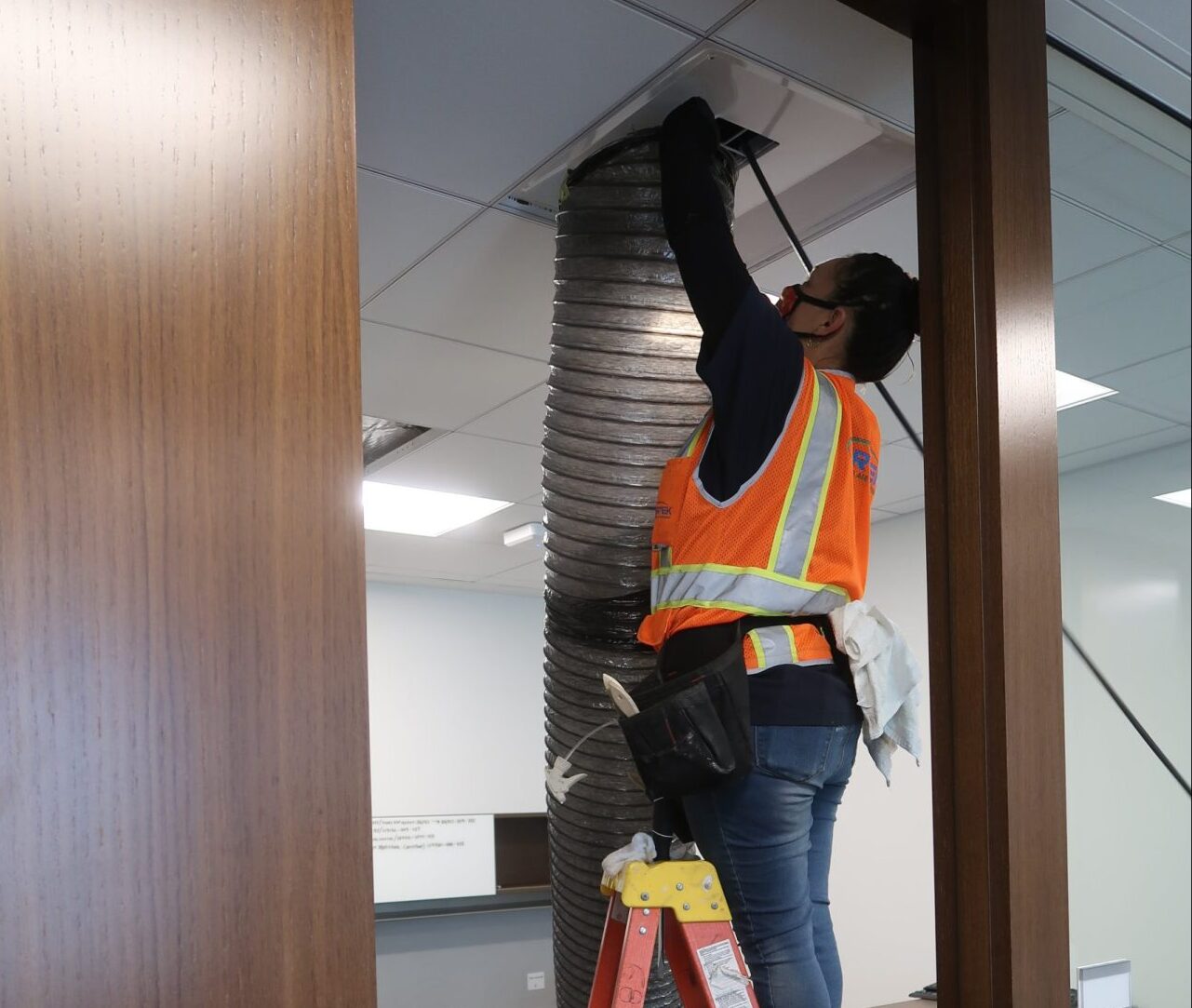
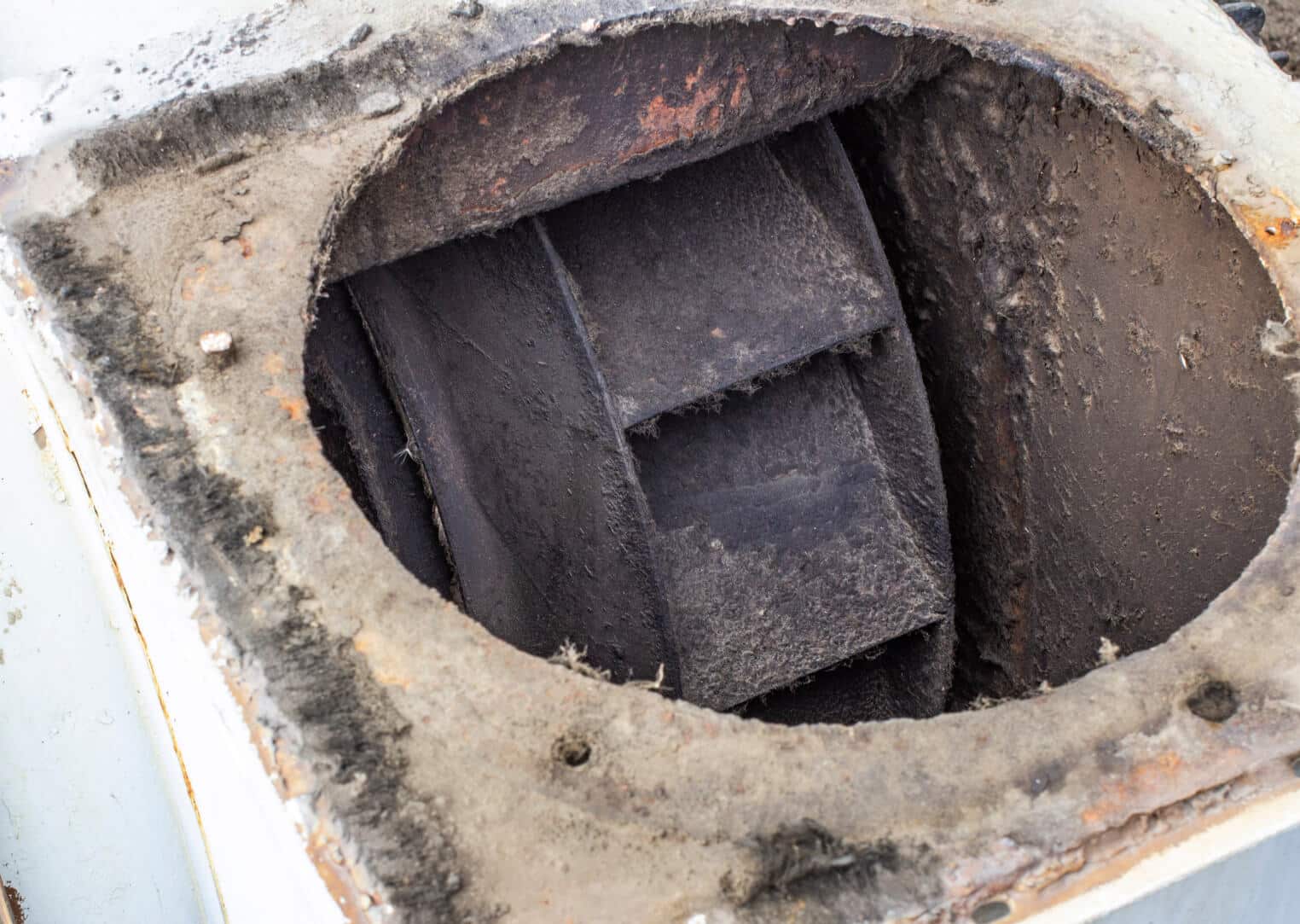
Indoor air problems can be caused by a variety of factors, including poor HVAC design, substandard filtration, and lack of maintenance; requiring a team of multi-disciplined professionals to fix the problems. Left unresolved, indoor air quality problems subject building occupants to prolonged exposure to chemicals, molds, dust mites, bacteria and other pollutants. Symptoms that workers commonly complain of include coughing, nasal congestion, sore throats, wheezing, asthma, eye irritation, headaches and fatigue. Most indoor air problems can be traced directly to the HVAC (heating, ventilating, air conditioning) system. Total HVAC and duct cleaning involves the components of the forced air systems, which include the air returns, supply air ducts and registers, diffusers, grilles, heating and cooling coils, fan motors and housing, air handling units and drip pans (where the moisture condenses and collects). It is vital that the service contractor clean all components, as one dirty component could potentially re-contaminate the air system. The HVAC system should be sanitized or de-contaminated with an EPA registered product after it has been properly cleaned. The Solution to Indoor Air Pollution Three factors critical to improving air quality are:
AIRTEK is a leading provider of commercial -industrial HVAC system cleaning. AIRTEK has helped thousands of commercial customers achieve a cleaner, safer and healthier indoor environment. All work is performed by experienced and qualified personnel in Beware of companies that offer to “clean” your system with chemical encapsulants or dust abatement products. These products are sprayed over the contaminants to restrict the movement and render them “harmless”. However many such products are not proven safe for use in air handling systems - the only safe way to clean your system is with source removal. |


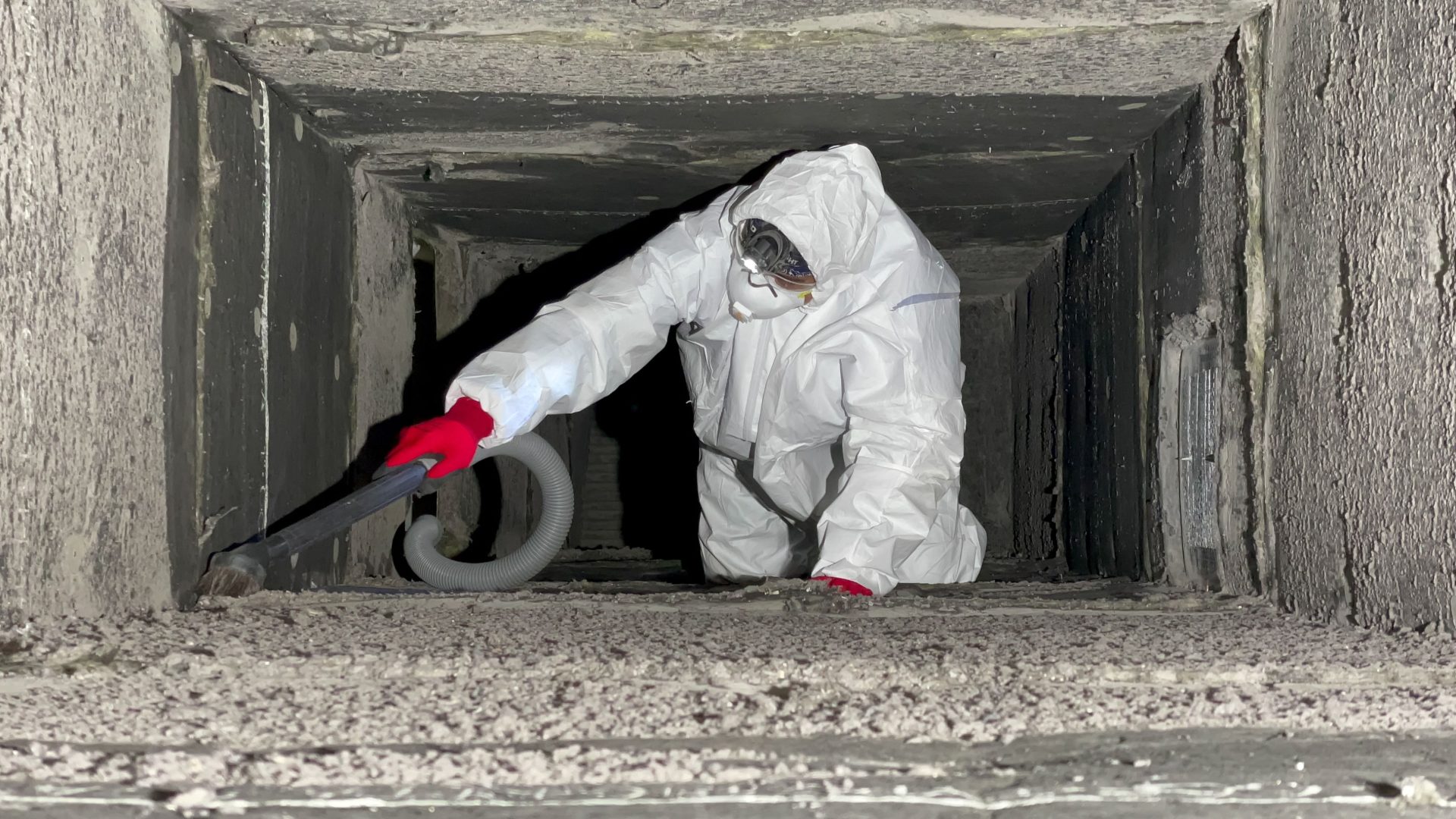
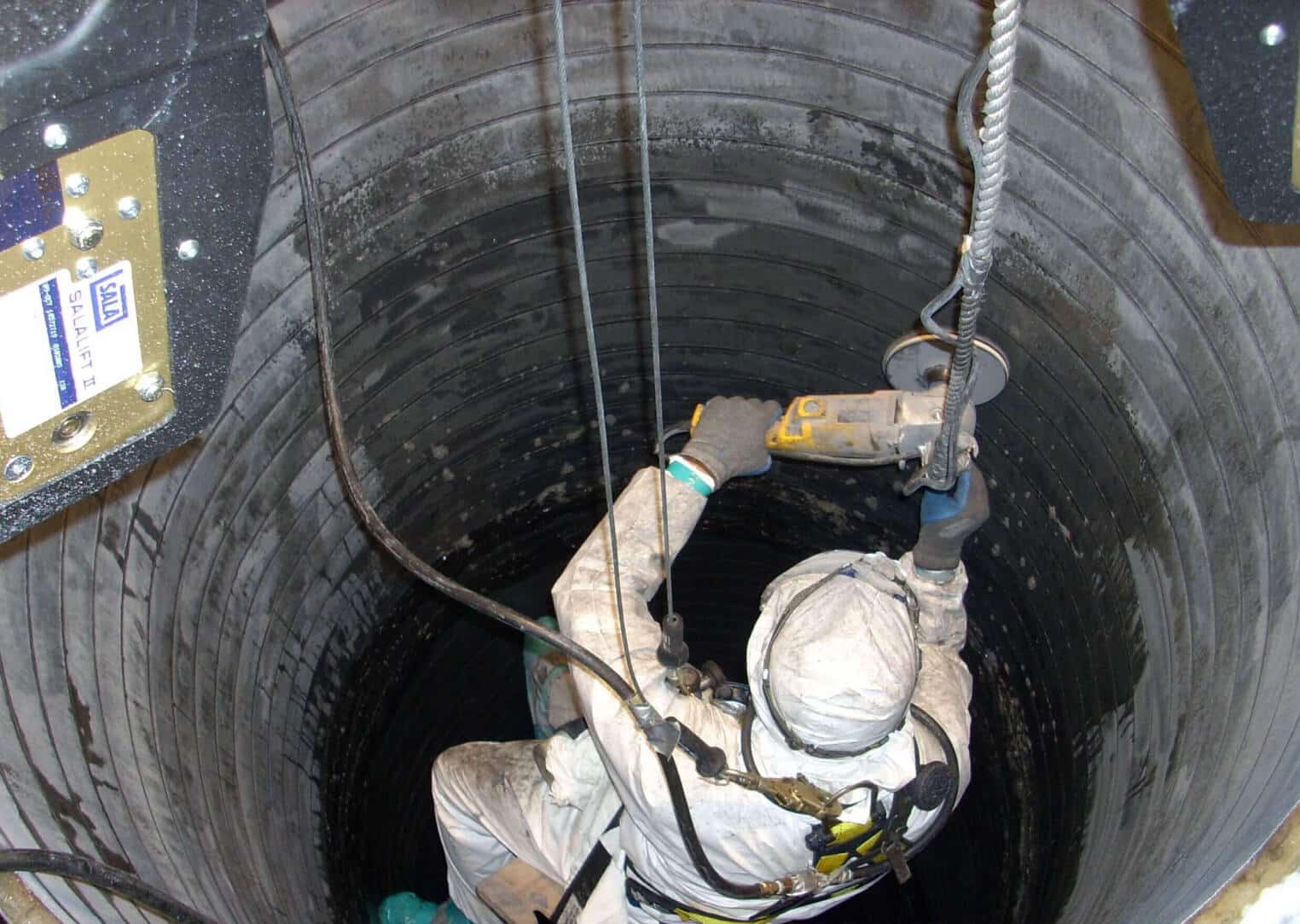
The NADCA approved cleaning method is called “Source Removal” or the mechanical cleaning of system components to remove dirt and debris. Source removal methods employ vacuum units, compressed air, mechanical and hand brushes and other tools to loosen dirt and debris to transmit to a containment device for proper disposal.
accordance with standards set by the National Air Duct Cleaning Association (NADCA) and CAL/OSHA.